China has become an important sourcing base for color cosmetics, including eyeshadow palettes, single pans, and cream-to-powder products. For global buyers, the question is not simply where a formula is made. It is whether the texture, color payoff, packaging, and production controls fit the intended market. A smooth swatch on a sample card is useful, but it cannot show how a shade performs after hours of wear or repeated use.
Eyeshadow Formulation brings together pigment selection, binder systems, press pressure, and sensory feel. Small changes can affect fallout, blendability, and color consistency across batches. Ask suppliers for ingredient information, product specifications, sample variations, and quality-control details. Then test shades under different lighting and on representative skin tones. Simple, but important. Results may vary by formula and application.
For buyers, a reliable supplier should explain what can be adjusted, what needs more testing, and what cannot be promised. Review stability, packaging compatibility, and documented testing before approving large-scale production. Requirements also differ by destination, so confirm relevant market rules with qualified professionals. One point is easy to overlook: the most impressive sample may not be the most practical product to manufacture consistently. Clear briefs and careful follow-up matter. This guide explores how buyers can assess Chinese suppliers, compare formulation options, and make decisions based on evidence rather than claims alone.
What Defines a High-Quality Eyeshadow Formulation in China?
A quality eyeshadow should deliver even color, smooth blending, and dependable wear. The powder should feel finely milled, not gritty, and resist excessive fallout when picked up with a brush. Grand View Research valued the global eye makeup market at USD 17.5 billion in 2023 and projected 6.2% annual growth through 2030. That market context makes consistent performance important, but a large market does not guarantee a good formula. Small details matter.
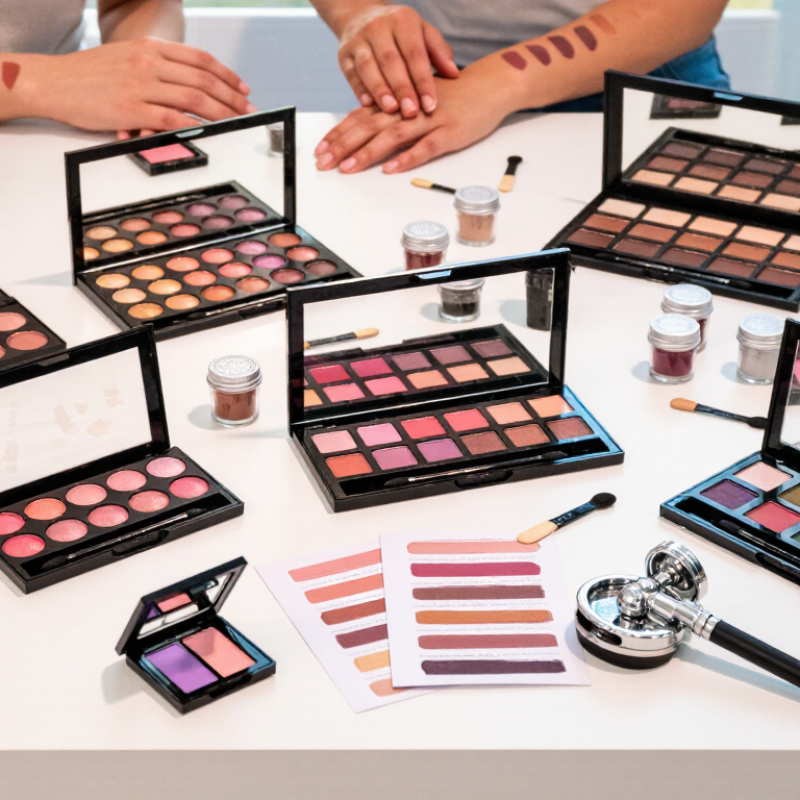
For pressed shadows, assess pigment dispersion, pan hardness, pickup, and payoff across light and deep shades. A swipe on the arm is not enough. Test with brushes and fingertips, then check whether the color blends without turning patchy. Compare batches under consistent lighting, and record shade changes after wear. Formula stability matters, too: heat, humidity, and packaging contact can affect texture or color. These checks should be documented, not left to memory.
Reliable manufacturers can provide ingredient specifications, batch records, stability results, and clear quality-control procedures. ISO 22716 offers guidance on good manufacturing practices for cosmetics; it does not certify that an eyeshadow performs well. Performance still needs testing. A limitation worth admitting: one formula may look excellent on a particular skin tone and disappoint on another. Buyer testing across shades, tools, and skin types can reveal those gaps before production scales.
| China Best Eyeshadow Formulation for Global Buyers? — What Defines a High-Quality Eyeshadow Formulation in China? | |||
|---|---|---|---|
| Quality Dimension | Powder Eyeshadow | Cream or Liquid Eyeshadow | Buyer Verification |
| Pigment and Color Payoff | Color should match the approved shade standard and build evenly without excessive pressure or repeated layering. | Color should apply evenly, blend within the agreed working time, and dry down without an unintended shade shift. | Review drawdowns or finished pans under consistent lighting; compare against an approved master and document acceptable color tolerance. |
| Blendability | Shades should blend without patchiness, harsh edges, or unexpected color transfer between adjacent shades. | Formula should spread smoothly before setting and allow enough time for blending for the intended application style. | Use a consistent brush or applicator, substrate, application amount, and evaluation procedure across samples. |
| Texture and Pressing | Pressed powder should have a uniform surface, controlled fallout, and sufficient cohesion for normal use without becoming difficult to pick up. | Texture should be uniform and free from visible separation, graininess, or lumps in the supplied sample. | Inspect multiple pans or units from the sample batch; assess pickup, fallout, surface integrity, and application feel. |
| Wear Performance | Wear should meet the agreed duration and appearance requirements, including resistance to fading, creasing, and transfer. | Set time and wear should suit the product claim; the formula should not crack, flake, or become uncomfortable during use. | Conduct a documented wear test on representative users or a suitable test panel under defined conditions. Substantiate any advertised wear claim. |
| Ingredient and Pigment Suitability | Colorants and other ingredients should be suitable for the intended cosmetic use and target-market requirements. | Ingredients should be assessed for the product type, intended eye-area use, and markets where the product will be sold. | Request the current ingredient list, colorant information, specifications, and supporting regulatory documents for each target market. |
| Microbiological Control | Low-water or anhydrous powders still require appropriate hygiene controls and a risk-based microbiological assessment. | Water-containing formulas generally need suitable preservation and microbiological testing; requirements depend on the formula and packaging. | Review the product risk assessment and relevant test reports. Preservative efficacy testing may be appropriate for products that support microbial growth. |
| Stability and Packaging Compatibility | Product should maintain color, odor, texture, and pan integrity during agreed storage and transport conditions. | Product should remain uniform and compatible with its container, closure, applicator, and wiper throughout the planned shelf life. | Review a stability plan covering appropriate temperature, light, and packaging conditions; check for leakage, separation, odor change, and packaging damage. |
| Manufacturing and Batch Consistency | Controls should address powder blending, pressing, fill weight, shade identity, and batch-to-batch variation. | Controls should address mixing, filling, fill weight, closure, and consistency of color and texture between batches. | Request batch specifications, representative production samples, change-control procedures, and applicable quality-system documentation. |
| Regulatory Readiness | Compliance depends on the ingredients, claims, labeling, and destination market; no single formulation is automatically suitable worldwide. | The same market-specific review applies, including ingredient restrictions, safety assessment, labeling, and claims substantiation. | Identify destination markets before approval and obtain market-specific documentation. Requirements can differ between regions and may change over time. |
| Practical Buyer Acceptance Criteria | Approve shade, payoff, blendability, fallout, pan integrity, and performance using written, product-specific limits. | Approve shade, spreadability, blending time, set time, wear, packaging function, and formula uniformity using written limits. | Use a signed product specification and approved reference sample; confirm that testing conditions and acceptance limits are agreed before production. |
Pressed powders blend and layer easily, but unbalanced formulas may dust onto cheeks. Creams offer richer color in fewer strokes. Loose pigments need careful handling.
Oils and waxes help creams glide across the lid. On oily lids, that same formula may crease. Results vary.
Matte formulas diffuse light. Satin shades soften shine. Metallic effects use reflective particles, whose size can change sparkle and texture.
Check payoff, blendability, fallout, and wear separately. A smooth-looking pan can still feel gritty or blend unevenly. Test both.
Try shades on eyelids and several skin tones, not just the hand. Compare results with and without primer, in daylight and indoor lighting.
Loose powder may collect around a palette hinge. Soft pressed pans can break during shipping. Test ordinary handling and transit when possible.
Request ingredient details, pigment information, quality documents, batch specifications, and stability-test information. Check that labeling fits the intended market.
Not completely. Record texture, pickup, payoff, fallout, and wear time for each shade. Keep the original sample for comparison, but note what the scorecard misses.
Choosing the right Eyeshadow Formulation in China means looking beyond color selection to the qualities that shape performance, consistency, and suitability for different markets. A high-quality formula should apply smoothly, blend evenly, provide reliable color payoff, and remain comfortable to wear. Ingredients each play a role: pigments create color, binders help the powder adhere, and emollients can influence texture and feel. Their balance affects how well the product performs over time.
Formulations also vary by texture and finish, from matte and shimmer powders to cream-like or pressed options, each offering a different application experience. Global buyers can assess suitability by reviewing ingredient information, quality-control processes, product samples, and relevant safety and regulatory documentation for their intended markets. Testing for color consistency, blendability, wear, and packaging compatibility can help buyers make informed comparisons and select a formulation that meets their product requirements.