Industry Knowledge & Insights

Beauty Manufacturing Insights

Expert perspectives, trend analysis, and breakthrough formulation knowledge from industry leaders.

0%

Cream cheek products look simple in a compact, but their performance depends on careful formulation. A smooth cream should spread evenly, blend without dragging, and retain its color after application. Cream Cheek Cosmetics Formulation also involves practical choices, including pigment dispersion, emollient selection, packaging compatibility, and wear feel. Small changes in waxes or oils can shift a formula from silky to heavy.

This Top 10 guide introduces manufacturers that may support brands at different stages, from early sampling to larger production runs. It considers formulation expertise, customization options, quality processes, communication, and experience with complexion products. Ask each manufacturer about sample revisions, stability testing, ingredient documentation, minimum order quantities, and production timelines. Details matter. A polished sample does not guarantee the same result at scale, so clear specifications and follow-up checks are useful. No shortlist is perfect. A supplier that suits a premium launch may not fit a lean startup or a fast-moving product line. Compare capabilities against your texture goals, target market, budget, and launch schedule before making a decision. The aim is not to treat a ranking as an endorsement, but to offer a grounded starting point for evaluating partners. A few thoughtful questions early on can prevent avoidable surprises later.
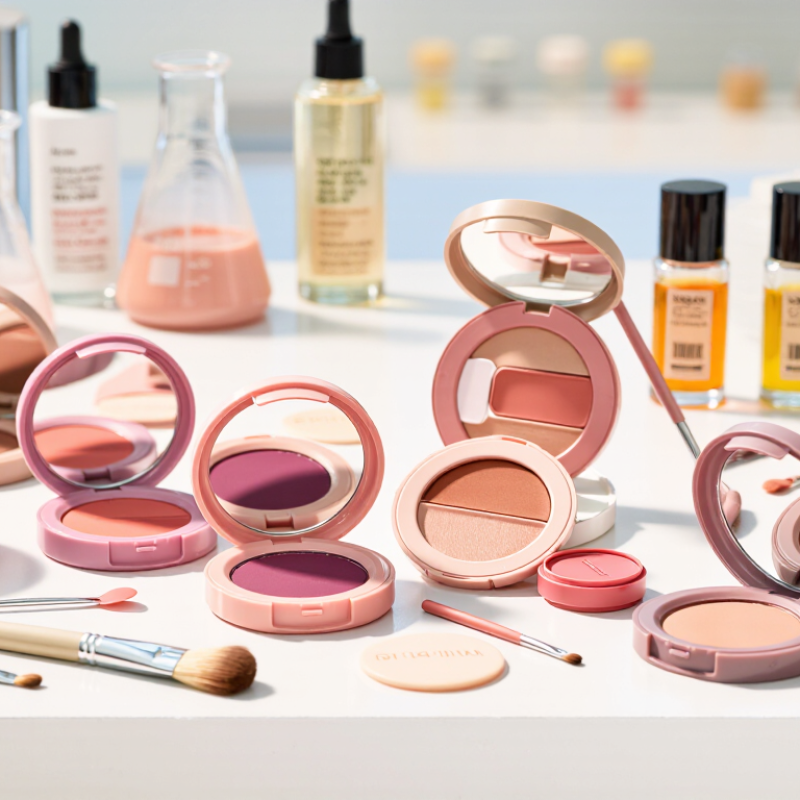
Top 10 Cream Cheek Cosmetics Formulation Manufacturers

Understanding Cream Cheek Cosmetics and Their Formulation Needs

Cream cheek cosmetics combine pigments with oils, waxes, and structuring agents to create a product that spreads smoothly and stays put. Formulators must balance color payoff with blendability, comfort, and wear. A formula that feels silky in the jar may drag across dry skin. Pigments also need even dispersion; otherwise, a swipe can look streaky or patchy. These details matter when manufacturers adjust a formula for different skin tones, climates, or packaging formats.

Tips: Test the product on cheeks, not only on a hand. Check how it blends over sunscreen and foundation. Watch for color shifts after several hours, and inspect the texture after repeated opening.

Stability testing can reveal separation, changes in scent, or a shift in firmness over time. Packaging deserves attention too: a wide jar is easy to use, but repeated finger contact may affect product hygiene. A compact can be more convenient, yet the formula must lift cleanly with a brush or fingertip. There is no perfect texture for everyone. Even a carefully developed sample may need another adjustment after real-use feedback. That uncertainty is worth discussing openly between a brand’s development team and its formulation manufacturer.

Cream Cheek Formulation: Example Stability-Test Temperatures

Temperature screening helps formulators assess whether cream cheek products retain their texture, color, and performance during storage. These are example test setpoints, not universal requirements; the appropriate stability protocol depends on the product and market.

Key Criteria for Evaluating Formulation Manufacturers

Top 10 Cream Cheek Cosmetics Formulation Manufacturers

Key Criteria for Evaluating Formulation Manufacturers

Choosing a formulation manufacturer is less about impressive samples and more about repeatable performance. Grand View Research estimated the global color cosmetics market at USD 80.6 billion in 2023, with continued growth projected through 2030. That scale raises the stakes for reliable development and production. Details matter. Ask how the team controls pigment dispersion, so a cream blush applies evenly instead of streaking or separating.

Evaluate testing, too. Request stability results across temperature changes, plus packaging compatibility data and clear batch records. A formula that looks smooth in a lab jar may behave differently in a compact after weeks of heat. The Cosmetics Europe 2023 annual report put European cosmetics and personal-care retail sales at EUR 96 billion, illustrating the breadth of a quality-conscious market.

For production controls, ask how the manufacturer applies ISO 22716 good manufacturing practices and tracks changes between pilot and commercial batches. Then review the working relationship: who owns the formula, how revisions are documented, and what evidence supports each claim? Ask to see shade-matching procedures and actual test protocols, not only a polished presentation.

Test it twice. One awkward truth: no checklist can predict every consumer’s preferred texture. Still, transparent records and a well-designed pilot run make surprises easier to spot before scale-up.

Profiles of 10 Cream Cheek Cosmetics Formulation Manufacturers

Cream cheek products demand a careful balance: the color must blend easily, while the texture stays comfortable and predictable. These ten manufacturer profiles describe useful differences in formulation strengths, rather than ranking suppliers. A color-cosmetics specialist may offer a broad pigment library and fast shade adjustments. A turnkey manufacturer can coordinate formulation, filling, and packaging, though buyers should confirm which steps happen in-house.

A small-batch producer may suit early trials and limited production runs. A high-volume facility may offer stronger capacity planning, but minimum order quantities can be restrictive. An ingredient-focused manufacturer may work with plant-derived emollients; ask how it manages odor, stability, and batch variation. A skin-comfort-focused team may emphasize wear testing and sensory feedback. Results depend on the product brief.

A cream-to-powder specialist can help develop a soft, set finish, while a packaging-focused supplier can test how formulas dispense from jars, tubes, or sticks. Other profiles include a regional contract manufacturer, whose shorter shipping routes may simplify communication, and an independent development laboratory, which can refine prototypes before scale-up. Each has trade-offs. A polished sample can still behave differently after filling or during warm storage. Request a written test plan, sample batch records, and clear change-control procedures. Ask who approves shade adjustments and how defects are documented. Details matter. Teams should also discuss target cost, production lead time, and the evidence behind stability claims.

Comparing Expertise, Compliance, and Customization Capabilities

Selecting among the top 10 cream cheek cosmetics formulation manufacturers takes more than comparing sample colors. Cosmetics Europe’s 2024 market report puts European cosmetics and personal care retail sales at €96 billion in 2023. That scale raises the stakes for reliable production, but a large facility alone proves little. Ask how a manufacturer controls pigment dispersion, adjusts wax and oil ratios, and checks color consistency across batches. Small details matter. Request stability data, microbiological testing records, and ingredient traceability. Check whether quality systems follow ISO 22716 good manufacturing practices; a certificate or audit document should be verified, not assumed.

Customization also needs evidence. A capable partner can adapt a cream blush for a specific finish, package, or target market, then explain the trade-offs in plain language. A softer formula may feel pleasant but transfer more easily. A highly pigmented sample may look vivid under studio lights and less natural in daylight. McKinsey’s 2024 State of Beauty report projects the global beauty market could reach $590 billion by 2028, yet market growth does not guarantee a successful product. Request pilot batches and evaluate them on different skin types, in real lighting, and after wear. One sample is not enough. Even good testing has limits; consumer preferences can shift after launch.

Choosing the Right Formulation Partner for Your Brand

Choosing a formulation partner for cream cheek cosmetics means looking beyond a smooth sample. The formula must spread evenly, set without feeling dry, and retain its color through storage. Ask manufacturers how they assess stability, microbial quality, packaging compatibility, and performance across production batches. Request test methods and results, not just reassuring claims. Details matter.

A 2023 McKinsey analysis estimated that the global beauty market could reach $580 billion by 2027, with annual growth of about 6 percent. That outlook makes product differentiation valuable, but it does not guarantee demand for any particular texture. Discuss minimum order quantities, lead times, ingredient traceability, and who owns formula adjustments before signing an agreement. Ask for a pilot batch and compare it with the approved laboratory sample. A polished first swipe can still hide scale-up problems; I would not treat it as proof. Also test the product on different skin types and under real wear conditions. If a supplier cannot explain a change in texture or color, pause and investigate.

Top 10 Cream Cheek Cosmetics Formulation Manufacturers - Choosing the Right Formulation Partner for Your Brand Supplier-selection guide: the rows below describe common manufacturer profiles, not named or independently ranked companies.
Profile Typical Cream Cheek Expertise Formats to Discuss Indicative Starting MOQ Typical Development Considerations Documentation to Request Potential Best Fit
01 — Full-Service OEM/ODM Partner Custom color cosmetics formulation, shade matching, filling, and finished-product coordination. Cream, balm, stick, and compact formats Often several thousand units; confirm by formula and packaging Allow time for briefs, lab samples, shade approval, stability work, and packaging confirmation. Ingredient list, product specifications, safety documents, test summaries, and quality-system details Brands seeking a coordinated development and manufacturing workflow
02 — Low-MOQ Flexible Manufacturer Shorter production runs and a narrower selection of established base formulas. Pot, compact, or selected stick formats Hundreds to low thousands of units, depending on components Low order quantities may come with fewer customization choices or higher unit costs. MOQ by shade, setup fees, batch-size limits, and available formula specifications Emerging brands testing demand or launching a small shade range
03 — Color-Matching Specialist Shade development, pigment dispersion, undertone adjustment, and color consistency support. Buildable creams, liquid creams, and pigmented balms Usually set by shade count, batch size, and minimum pigment quantities Request physical color standards and agree on evaluation conditions before approval. Shade tolerances, color-control process, sample history, and batch-release criteria Brands prioritizing a broad or carefully differentiated shade range
04 — Natural-Ingredient-Focused Partner Formulation options using selected plant-derived oils, waxes, and emollients. Balms, cream pots, and anhydrous sticks Varies with ingredient availability and requested certifications Natural-origin preferences do not by themselves establish certification or a longer shelf life. Ingredient origin information, allergen details, claim substantiation, and any valid certification scope Brands with defined ingredient sourcing or natural-origin requirements
05 — High-Pigment Formula Specialist Development of opaque, high-color-payoff formulas and pigment-rich shades. Dense creams, cream-to-powder products, and sticks Set by formula complexity, pigment sourcing, and production equipment Assess blendability, payoff, staining, transfer, and shade uniformity on skin. Pigment specifications, dispersion controls, performance-test methods, and batch records Brands targeting bold color or strong one-swipe payoff
06 — Lightweight Texture Developer Sheer, spreadable textures designed for layering and a lighter skin feel. Serum-like creams, liquid blush, and soft balms Depends on whether the base is stock, modified, or fully custom Evaluate settling, separation, dry-down, layering, and performance across intended climates. Formula specifications, stability data, compatibility results, and use instructions Brands seeking sheer, blendable, or skin-care-inspired cheek products
07 — Stick and Compact Packaging Specialist Filling and assembly experience for solid or semi-solid cheek products. Twist-up sticks, pans, and compacts Frequently influenced by component supplier minimums Test formula fit with the chosen pack, including dispensing, breakage, leakage, and heat exposure. Packaging specifications, compatibility-test results, filling tolerances, and component sourcing details Brands that need a particular applicator, portable pack, or retail-ready assembly
08 — Water-Based Emulsion Manufacturer Development of cream or liquid formulas containing a water phase. Emulsion creams, liquid blush, and squeeze-tube products Determined by batch requirements, preservative system, and line capacity Preservation, microbial quality, stability, and packaging compatibility require appropriate assessment. Preservative details, microbial test reports, stability protocol, and manufacturing controls Brands seeking a fresh, emulsion-style texture rather than an anhydrous balm
09 — Scale-Up and Multi-Market Partner Production planning for larger volumes and support for market-specific documentation requests. Established cream, liquid, and stick product families Often higher for dedicated production runs; request volume tiers Confirm capacity, forecast requirements, change-control procedures, and destination-market responsibilities. Quality certifications and their scope, audit information, traceability, and regulatory support boundaries Growing brands planning repeat orders or distribution across multiple markets
10 — Product-Development-Led Boutique Partner Hands-on formulation support, iterative sampling, and smaller-scale development projects. Custom creams, balms, and limited-run concepts Project-specific; separate development fees may apply Clarify sample rounds, ownership terms, timelines, and the path from lab batch to production. Development agreement, formula ownership terms, test plan, specifications, and production quotation Brands with a distinctive brief that need closer technical collaboration
Note: MOQ and development timelines vary by formula, shade count, packaging, ingredient sourcing, testing needs, and factory schedule. The ranges and profiles are indicative planning guidance, not verified specifications for particular manufacturers. Confirm current capabilities, pricing, certifications, regulatory responsibilities, and lead times directly with each prospective supplier.

FAQS

What makes cream cheek cosmetics difficult to formulate?

Pigments, oils, waxes, and structuring agents must work together. The product should blend smoothly and feel comfortable. Small imbalances can cause streaks or dragging.

Why should a cream cheek product be tested on cheeks?

Cheek skin may behave differently from the back of a hand. Test it over sunscreen and foundation, then check the color after several hours. Real wear matters.

What stability changes should manufacturers look for?

Check for separation, scent changes, and shifts in firmness. Repeated opening can also affect texture. Small changes deserve attention.

How does packaging affect product performance?

A wide jar is easy to reach into, but repeated finger contact may affect hygiene. A compact may be tidier. Check that a brush or fingertip lifts the product cleanly.

What should buyers ask a formulation manufacturer?

Ask for test methods, stability results, sample batch records, and change-control procedures. Clarify who approves shade changes and records defects. Get details in writing.

Is a smooth laboratory sample proof of production quality?

No. Filling and scale-up can change the texture or color. Compare a pilot batch with the approved sample. One good swipe proves little.

How should a buyer choose between different manufacturer types?

Match the partner to the project. Small-batch producers may fit early trials, while larger facilities may offer more capacity. Minimum order quantities can be restrictive.

What should be checked before approving a final formula?

Test different skin types and real wear conditions. Review packaging compatibility, production consistency, lead times, and ingredient traceability. I would still leave room for another adjustment.

Conclusion

This article explores the formulation needs behind cream cheek cosmetics, including texture, blendability, color payoff, wear, and compatibility with different packaging formats. It also explains how to assess a formulation manufacturer by reviewing technical expertise, production capabilities, quality systems, communication, and willingness to tailor a formula to a brand’s goals. The focus is on practical considerations that can help teams compare potential partners and understand what a reliable development process may involve.

Profiles of 10 manufacturers offer a framework for comparing experience, compliance practices, customization options, and support throughout product development. Rather than treating every provider as interchangeable, the article highlights the value of matching a partner’s capabilities to a project’s needs, timeline, and expectations. By considering these factors together, brands can make a more informed decision about a Cream Cheek Cosmetics Formulation partner and build a clearer path from concept to finished product.

Clara

Clara

Clara is a dedicated marketing professional with a strong understanding of the company’s products, customers, and industry landscape. With a practical approach to market research, content strategy, and customer communication, she helps translate complex product capabilities into clear, useful, and......