Expert perspectives, trend analysis, and breakthrough formulation knowledge from industry leaders.
Discover how custom formulation techniques and clean beauty trends are shaping global brands.
Stay informed with regulatory updates, supply chain strategies, and private label guidance.
Complexion products look simple on a shelf. Their manufacturing is not. Foundations, concealers, powders, and tinted moisturizers must balance shade accuracy, texture, coverage, wear, and dependable batch quality. A warm-beige liquid foundation may look right in a laboratory cup, then shift under retail lighting or separate after transport. Small details matter.
Complexion Cosmetics Manufacturing depends on careful formulation, controlled production, and evidence from testing. Cosmetic chemist and educator Perry Romanowski offers a useful principle, paraphrased here: “Repeatable product quality begins with sound formulation and disciplined process control.” Buyers can use that lens when comparing manufacturers. Ask how they manage pigment dispersion, shade matching, stability testing, production records, and packaging compatibility. Request clear documentation, not just a polished sample. A polished sample can still mislead. That gap matters.
This guide examines manufacturers serving global buyers and the capabilities that distinguish reliable partners. It considers formulation support, production scale, quality systems, customization, and communication across development stages. Buyers should also confirm that product claims, ingredients, labeling, and documentation suit each intended market; requirements differ by destination. No supplier is right for every brief. Even a capable manufacturer may have limits in minimum order quantities, shade libraries, or lead times. Those constraints deserve a candid conversation before a launch plan takes shape.
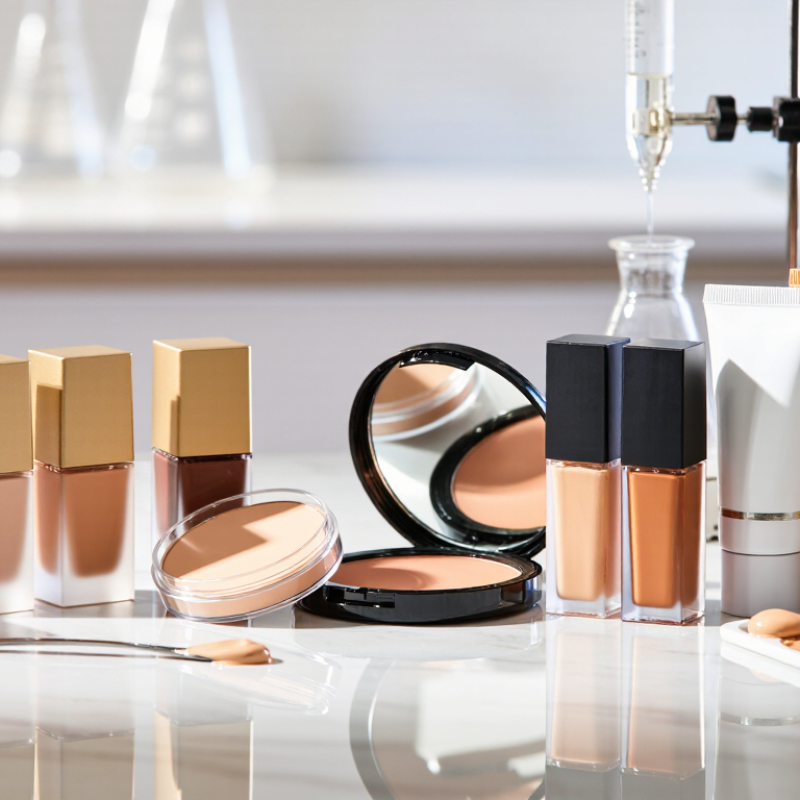
Complexion cosmetics are products used to even, conceal, set, or add dimension to facial skin. The category commonly includes primers, foundations, concealers, powders, and cheek color such as blush and bronzer. Formulas range from liquid and cream to compact powder and stick formats. Small differences matter. A foundation may offer sheer coverage and a dewy finish, while a pressed powder can reduce shine around the nose during a long day.
For buyers comparing manufacturers, useful specifications include shade range, undertone options, coverage, finish, wear testing, and packaging compatibility. A shade that looks right under studio lighting may shift in daylight. Testing across different skin tones and lighting conditions is therefore practical, not merely cosmetic. Setting sprays and primers may also sit near the category boundary; their functions can overlap with skincare or makeup preparation.
Grand View Research estimated the global color cosmetics market at USD 81.5 billion in 2023, reflecting a broad market that includes face makeup. This figure is not a complexion-only estimate, so it should not be treated as one. The distinction is easy to miss. Product definitions also vary between reports and suppliers, making clear category descriptions important in sourcing documents. Even experienced buyers may find these boundaries less tidy than a product catalogue suggests.
Complexion cosmetics development starts with a clear product brief: desired coverage, finish, wear time, and target skin tones. Formulators translate those goals into a suitable base, such as an emulsion, cream, or pressed powder. A foundation may need to spread smoothly without settling into fine lines. Concealers often require higher pigment levels, which can make texture harder to balance. Small changes matter.
Teams select pigments, oils, powders, and stabilizers, then test how they work together. Pigments must disperse evenly to prevent streaks or visible specks. Shade matching is checked under different lighting because a sample can look warmer beside a window than under studio lamps. Not every batch behaves. Pilot production can reveal changes in thickness, color, or filling speed that were not obvious in a small laboratory sample.
Manufacturers adjust mixing speed, temperature, and processing time to improve consistency. They also check product appearance, texture, packaging compatibility, and microbial quality using methods suited to the formula. Stability testing can show whether color, scent, or texture shifts during storage. A pump may clog with a thick formula, while a jar exposes it to repeated handling. Early samples sometimes feel heavier than expected, so teams may need to revise the formula and repeat testing before production scales up.
Global buyers should assess more than price and shade range. Cosmetics Europe’s 2024 Market Performance report puts European cosmetics and personal-care retail sales at €96 billion in 2023. That figure shows market scale, not a supplier’s quality. For complexion products, request documented controls for pigment dispersion, viscosity, microbial limits, and shade consistency. Ask for batch records, certificates of analysis, and stability results under defined heat and light conditions. A liquid foundation may separate after weeks in a warm warehouse. Small detail. Check packaging compatibility too; a pump can clog even when a formula passes initial checks.
ISO 22716 provides cosmetics good manufacturing practice guidelines, but a certificate alone cannot guarantee every batch. Review the audit scope, corrective-action records, ingredient traceability, and change-control process. Ask how the manufacturer investigates out-of-spec results and approves formula changes. Paperwork has limits. A successful test may not predict every climate or shipping route. Where possible, compare samples from multiple production lots and request independent laboratory testing for key specifications. The honest answer may include limitations; that gives buyers something concrete to evaluate.
Leading Complexion Cosmetics Manufacturers for International Buyers
International buyers need complexion cosmetics manufacturers that can deliver consistent products across changing markets. A capable partner should explain its formulation process, quality checks, and production capacity in clear terms. Ask how it controls texture, coverage, and shade consistency between batches. Request representative samples and compare them under daylight, indoor lighting, and on different skin tones. Small shifts matter. A swatch may look balanced on a screen but appear warmer on skin. Reliable records for ingredients, batch testing, and product specifications help buyers evaluate quality and prepare for local market requirements.
Production reliability deserves equal attention. Review sample timelines, minimum order quantities, lead times, and how the manufacturer handles changes or delays. Clarify who approves artwork, packaging materials, and final product samples before production begins. Packaging should protect creams and liquids from leakage, heat, and rough handling during transit. Ask for available test reports and documentation, then confirm that they match the intended product and destination market. No checklist removes every risk. A supplier’s polished presentation is useful, but it cannot replace careful sample review and direct questions. Some details may still be missed, especially when timelines are tight. Clear communication and written agreements make those gaps easier to identify before a large order is placed.
| Buyer Evaluation Dimension | What to Assess | Evidence to Request | International Buyer Consideration |
|---|---|---|---|
| Product-format capability | Experience with foundations, concealers, powders, primers, tinted moisturizers, and other complexion formats. | Relevant product samples, development briefs, and confirmation of available production processes and packaging options. | Confirm that the facility can support the specific formula type, pack format, and intended order size. |
| Shade development | Ability to develop and maintain a consistent shade range, including undertones and repeatable color matching. | Approved shade standards, color-measurement methods, batch records, and procedures for evaluating color variation. | Agree on shade references and acceptance criteria before production; assess samples under relevant lighting conditions. |
| Cosmetic GMP | Documented controls for manufacturing, personnel, premises, equipment, production, and quality activities. | Current GMP documentation and audit evidence. ISO 22716 provides guidelines for good manufacturing practices for cosmetics. | Check the scope and status of any certification or audit; certification does not replace market-specific legal review. |
| Formula safety and stability | Risk assessment and appropriate testing for the formula, packaging, intended use, and target markets. | Stability and compatibility protocols, safety documentation, and test reports relevant to the product. | Test plans and required documentation vary by product and destination market; confirm requirements before launch. |
| Microbiological quality | Controls suited to the product’s formulation, manufacturing process, packaging, and expected use. | Microbiological specifications and test results; where appropriate, preservative efficacy testing such as ISO 11930. | Testing should be selected and interpreted for the specific product. ISO 11930 is a test method, not a universal requirement for every product. |
| European Union market readiness | Ability to support applicable requirements under Regulation (EC) No 1223/2009 for cosmetics placed on the EU market. | Information needed for the safety assessment and Product Information File, plus support for applicable notification and labeling steps. | The EU framework includes requirements such as an EU responsible person, a safety assessment, a Product Information File, and CPNP notification. |
| United States market readiness | Ability to provide information needed for applicable U.S. cosmetics requirements, including relevant MoCRA obligations. | Product and facility information, safety-substantiation support, and records needed for applicable reporting and listing obligations. | MoCRA requirements may include facility registration and product listing, subject to applicable exemptions and requirements. Sunscreen claims can place a product under U.S. OTC drug rules. |
| China market readiness | Experience supporting the applicable registration or filing pathway and product documentation for cosmetics in China. | Formula, safety, testing, and labeling information needed for the relevant product category and regulatory pathway. | Requirements depend on product classification and current rules; confirm the pathway with qualified regulatory support before shipment. |
| Ingredient and claims documentation | Traceable ingredient information and evidence appropriate to product claims, such as “natural” or “organic.” | Ingredient specifications, supplier documentation, and substantiation for marketing claims. ISO 16128 provides guidance on definitions and criteria for natural and organic cosmetic ingredients. | Ingredient-origin guidance does not by itself certify a finished product or authorize a claim in every market. |
| Supply-chain and batch traceability | Ability to trace ingredients and packaging through production and retain batch-level quality records. | Lot coding, material traceability records, batch documentation, and a documented process for handling nonconforming product. | Agree on record retention, change notification, and traceability expectations in the quality agreement. |
| Packaging and export readiness | Compatibility of primary packaging with the formula and readiness of artwork and shipping documentation. | Packaging compatibility results, approved artwork controls, product specifications, and export document capability. | Check destination-market labeling, language, importer details, and transport conditions before approving final artwork. |
| Note: This table presents neutral due-diligence criteria and regulatory references for comparing potential manufacturers. It does not rank or certify individual suppliers; requirements should be verified for each product and destination market. | |||
Selecting a complexion cosmetics manufacturer takes more than comparing prices and sample shades. Buyers should inspect batch records, raw-material traceability, color-matching controls, and the process for handling defects. Ask to see how a warm beige foundation is checked across production runs, not just in a showroom sample. Paperwork matters. So does the line itself.
McKinsey’s 2023 beauty market analysis projected roughly 6% annual growth through 2027. That outlook makes production capacity and lead-time planning important, but expansion claims need evidence. Review recent on-time delivery data, backup equipment, and how the supplier manages ingredient or packaging delays. Cosmetics Europe reported European cosmetics and personal care retail sales of €96 billion in 2023, a reminder that market demand is substantial, though it does not guarantee steady orders for any one buyer.
A useful assessment combines a site audit with small, documented production trials. Check shade consistency, filling accuracy, packaging compatibility, and retained-sample procedures. Ask who investigates a failed batch, and request a clear corrective-action record. I would not treat a polished audit score as proof of dependable daily work; one visit can miss a lot. Compare the supplier’s written controls with what operators actually do, then record unresolved gaps before committing to scale.
Specify coverage, finish, wear time, and target skin tones. These choices help guide the formula’s base.
Concealer often needs more pigment, which can make its texture harder to balance. It may feel thick.
They compare samples under different lighting and across skin tones. A shade can look warmer by a window than under studio lamps.
Mixing speed, temperature, and processing time can affect thickness, color, or filling speed. Not every batch behaves.
Ask for batch records, ingredient traceability, test results, and details about formula changes. Paperwork has limits.
Stability checks can identify shifts in color, scent, or texture during storage. A thick formula may clog a pump.
Compare samples from different production lots under daylight and indoor lighting. A polished sample can still mislead.
Confirm sample timelines, minimum order quantities, lead times, and who approves packaging and final samples. Tight schedules leave gaps.
This article explores the complexion cosmetics market, covering products such as foundations, concealers, powders, primers, and tinted skincare. It explains how manufacturers turn product concepts into finished goods through formulation, shade development, testing, filling, and packaging. Readers will also learn how production capabilities, quality controls, consistency, and customization options can vary among manufacturers serving international buyers.
The guide outlines practical ways to compare suppliers and choose a suitable manufacturing partner. Buyers can assess a manufacturer’s experience, product range, development support, production capacity, communication, and ability to meet agreed quality requirements. By understanding these factors, businesses can make more informed sourcing decisions and build effective partnerships in Complexion Cosmetics Manufacturing.