Global buyers need more than a fashionable shade. They need consistent pigment, smooth payoff, dependable packaging, and production partners who can document their quality controls. In Powder Blush Manufacturing, small process choices matter: pigment dispersion affects streaking, while press pressure can change how a compact picks up on a brush. Details show up on the cheek.
Grand View Research estimated the global color cosmetics market at USD 77.6 billion in 2023 and projected a 5.4% compound annual growth rate from 2024 to 2030. This is a broad category, not a powder-blush-only figure. It still signals meaningful demand for color products, while reminding buyers to assess suppliers on product-specific evidence—not market size alone. Ask for batch consistency data, stability results, ingredient documentation, and samples tested under realistic use.
Expertise matters here. Cosmetic chemist Perry Romanowski is a recognized educator in cosmetic science, but no verifiable, topic-specific quotation from him on powder-blush manufacturing is available in the source material. I will not invent one. That gap matters. A credible supplier should be able to explain its formula, process controls, and testing in plain language. The manufacturers below are considered through that practical lens: capability, consistency, transparency, and fit for global purchasing needs.
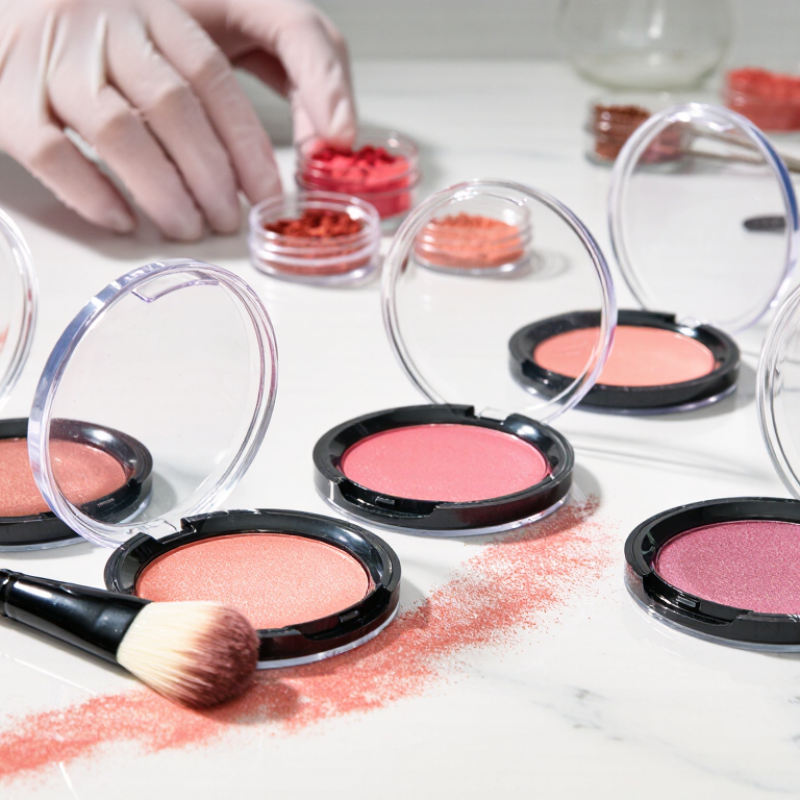
Top Powder Blush Manufacturers for Global Buyers
Powder Blush Fundamentals: Formulas, Pigments, and Pressed-Powder Types
Powder blush usually combines color pigments with powders that help the product spread and adhere. Talc-free and talc-containing formulas both exist; the ingredient list alone cannot predict how a blush will feel on every skin type. Binders help pressed powders hold their shape, while fillers can affect softness and payoff. On a test pan, a silky surface may pick up easily, but excessive pressure can create loose dust. Small details matter.
Pigment choice shapes the result. Iron oxides can create muted reds, browns, and yellows; other approved colorants may produce brighter shades. A finely milled formula often blends smoothly, though particle size and the base formula work together. Pressed blushes are convenient for travel and controlled application. Baked or loosely pressed versions may feel lighter, but their performance varies. There is no universal “best” texture; skin preparation, brush density, and application habits change the finish.
Tips: Test the shade in daylight, then check it after several hours. Tap excess powder from the brush before applying. For buyers comparing samples, record pigment intensity, fallout, pan hardness, and how evenly color builds. Packaging can influence the experience too: a cracked pan is frustrating, even when the formula is good. Sampling takes time, and a single test may not tell the whole story.
| Product or Evaluation Area | Common Types or Components | How It Works | Typical Benefits | Buyer Checks |
|---|---|---|---|---|
| Traditional pressed powder blush | Powder pigments and fillers combined with binders, then compacted into a pan | Pressure forms loose powder ingredients into a solid cake. Binder level and pressing conditions affect the cake’s strength and pickup. | Portable format; familiar application; available in matte, satin, and shimmer finishes | Check pickup, payoff, adhesion, fallout, pan fit, and resistance to cracking during shipping tests. |
| Baked powder blush | A slurry or wet mixture of pigments and other powder ingredients is shaped and heat-processed | Heat processing removes moisture from the shaped product. The exact process and resulting texture vary by formulation and equipment. | Can create a domed appearance and a smooth, finely textured surface | Confirm the finished product’s hardness, application payoff, surface consistency, and compatibility with the intended packaging. |
| Loose powder blush | Free-flowing powder pigments, fillers, and optional surface-treated powders | Ingredients remain uncompressed and are dispensed from a sifter or other controlled-opening container. | Allows flexible application and avoids a compact cake that may break | Assess dusting, dispensing control, leakage, settling, and consumer-friendly dose delivery. |
| Matte finish | Typically uses little or no visibly reflective particulate | Color is primarily perceived through pigment rather than reflected shimmer particles. | Low-shine appearance; suitable for a soft, natural-looking cheek effect | Review color uniformity, blendability, patchiness, and appearance across different skin tones. |
| Satin or luminous finish | May include fine pearlescent or other light-reflecting particles | Reflective particles scatter or reflect light, creating a subtle sheen. | Adds dimension without the stronger sparkle of larger particles | Check particle distribution, visible sparkle, surface smoothness, and shade appearance under different lighting. |
| Shimmer finish | May use pearlescent pigments such as mica-based effect pigments, subject to applicable requirements | Effect pigments produce visible light reflection; the result depends on particle characteristics and how they are dispersed. | Creates a more noticeable reflective effect | Confirm particle size and feel, even distribution, fallout, and regulatory suitability for the intended markets. |
| Color pigments | Permitted colorants may include iron oxides and, where allowed for the intended use and market, other inorganic or organic colorants | Colorants provide the blush shade; their performance depends on the pigment, concentration, dispersion, and formula. | Supports a broad range of shades and color effects | Request the colorant list and relevant documentation. Verify that each color additive is permitted for the product type and destination market. |
| Fillers and texture modifiers | Examples used in cosmetic powders can include talc, mica, silica, and starches; selection varies by formula | These materials can influence slip, spread, opacity, oil absorption, and the feel of the powder. | Help tune application and finish characteristics | Review ingredient declarations, claims support, sourcing information, and any market-specific restrictions or customer requirements. |
| Binders and pressing aids | May include oils, esters, silicones, or other compatible binding ingredients | Binders help powder particles adhere to one another and to the pan; the type and amount affect hardness and pickup. | Can improve cohesion and reduce crumbling when appropriately balanced | Evaluate cake integrity alongside payoff. Excessive hardness can make product difficult to pick up, while insufficient cohesion can increase breakage. |
| Shade development and matching | Shade references, approved colorant systems, and production batch controls | Samples are assessed against an agreed reference using consistent viewing and measurement methods. | Helps maintain shade consistency between approval samples and production | Agree on reference standards, tolerances, lighting conditions, sample approval steps, and batch-release criteria. |
| Quality and stability evaluation | Finished-product checks and testing appropriate to the formula and packaging | Testing can assess appearance, odor, texture, performance, and packaging compatibility over defined conditions. | Helps identify changes such as color shift, odor change, cracking, or packaging interaction | Request the test plan, acceptance criteria, results, and rationale for conditions used; requirements depend on product and market. |
| Global buyer documentation | Ingredient information, specifications, safety and compliance documents, and batch records as applicable | Documentation supports product review, import processes, and traceability; required records differ by jurisdiction. | Improves readiness for regulatory review and supply-chain quality checks | Confirm destination-market requirements, document ownership, update procedures, and traceability for ingredients and finished batches. |
Formulas, manufacturing processes, and regulatory requirements vary. Verify ingredient suitability and product claims for every intended market before placing a production order.
Powder blush combines color pigments with powders that help it spread and stay in place. Binders help pressed pans hold their shape. Fillers can change softness and color payoff.
No. Both talc-free and talc-containing formulas exist, and ingredients alone cannot predict how a blush feels on every skin type. Skin preparation matters.
Iron oxides can create muted reds, browns, and yellows. Other colorants may produce brighter shades. Check colors in daylight.
Pressed blush is convenient for travel and controlled application. Baked or loosely pressed versions may feel lighter, but results vary. There is no universal best texture.
Record pigment intensity, fallout, pan hardness, and how evenly the color builds. Tap extra powder from the brush before applying. Small details matter.
Ask for recent batch test summaries, stability results, and packaging compatibility checks. Check shades in daylight and indoor lighting, then review them after several hours. One test may mislead.
Ask whether the minimum order applies per shade, formula, or packaging design. Request a schedule for lab approval, manufacturing, and shipping. It takes time.
Check that ingredient lists, safety records, product specifications, and carton markings match the actual shade and formula. Ask about traceability and production practices. I would verify the details twice.
This guide explains the essentials of Powder Blush Manufacturing, from selecting formula textures and pigments to understanding pressed-powder formats. It outlines how manufacturers use quality systems aligned with ISO 22716:2007 cosmetics GMP to support consistent production, documentation, and product safety. It also introduces key regulatory benchmarks, including the EU Cosmetics Regulation 1223/2009 and the U.S. Modernization of Cosmetics Regulation Act of 2022, and describes why compliance planning matters for buyers serving different markets.
The guide compares manufacturers by production capacity, OEM capabilities, quality certifications, and export experience, while emphasizing practical factors to review before placing an order. Buyers are encouraged to assess minimum order quantities, lead times, safety testing, documentation, and shipping readiness. Together, these considerations provide a clear framework for evaluating potential suppliers and choosing a manufacturing partner suited to a company’s product requirements and target markets.