Expert perspectives, trend analysis, and breakthrough formulation knowledge from industry leaders.
Discover how custom formulation techniques and clean beauty trends are shaping global brands.
Stay informed with regulatory updates, supply chain strategies, and private label guidance.
Choosing a cosmetic development partner can shape a product’s safety, performance, and commercial future. This matters even more when buyers compare private-label manufacturers, laboratories, and full-service suppliers. Cosmetic Custom Formulation is not simply a request for a pleasant texture or attractive fragrance. It involves ingredient selection, compatibility testing, stability assessment, manufacturing control, and clear documentation.
Cosmetic chemist Perry Romanowski has often described formulation as “a balance of art and science.” That balance appears in practical details. A cream may feel elegant in the lab, yet separate after several weeks of heat exposure. A serum may look impressive, but its active ingredient may not remain stable. These issues make technical experience more valuable than a polished website. Buyers should examine each supplier’s laboratory capabilities, quality systems, minimum order quantities, pilot-batch process, packaging knowledge, and regulatory support.
This guide presents ten Cosmetic Custom Formulation suppliers for serious buyers. The comparison focuses on development experience, communication, testing depth, production scalability, ingredient transparency, and support after launch. Some suppliers may excel in natural skincare, while others may perform better with color cosmetics, haircare, or complex emulsions. No supplier is perfect. A low minimum order may come with limited customization, and a famous name may still provide slow communication. Buyers should ask difficult questions, request relevant documentation, and test samples under realistic conditions. The strongest partnership is not always the cheapest or largest. It is the one that can explain its decisions, acknowledge limitations, and consistently turn a brief into a safe, manufacturable product.
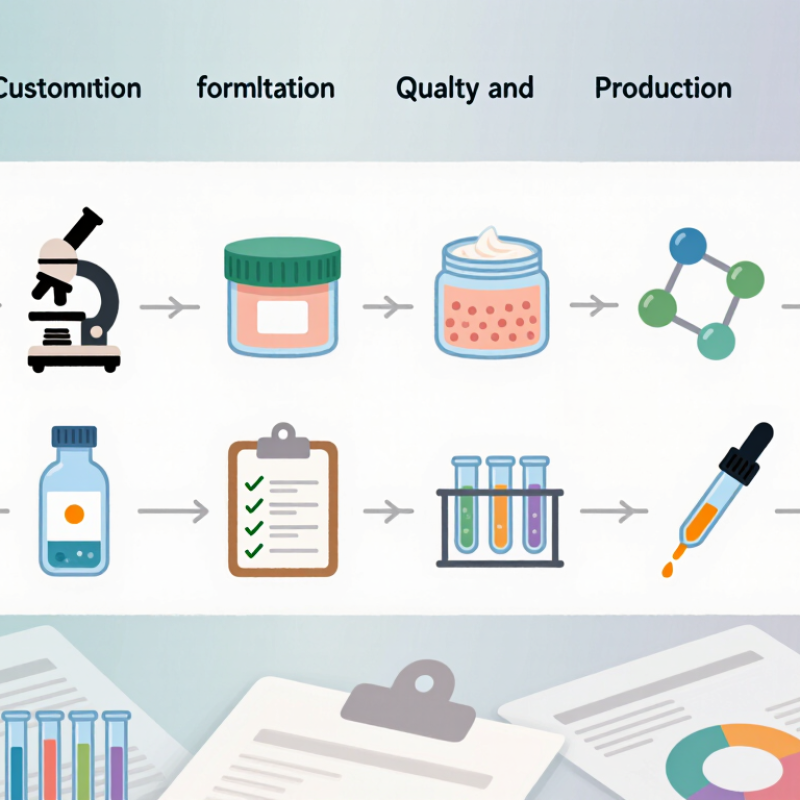
Cosmetic custom formulation suppliers are technical partners that turn a buyer’s product idea into a tested, manufacturable formula. They work with creams, cleansers, serums, masks, and other personal care products. Their role goes beyond mixing ingredients. A reliable supplier studies skin feel, appearance, fragrance, stability, packaging, and production costs before scale-up.
Core services often include concept development, ingredient selection, laboratory prototypes, and formula revisions. Experienced chemists may adjust viscosity, emulsification, color, or absorption after practical testing. Stability testing can expose separation, odor changes, or texture loss under heat and cold. Preservative effectiveness testing and microbial checks support product safety. Packaging compatibility testing is also important, because a pump, tube, or jar can affect the formula.
Documentation matters. Buyers should expect ingredient specifications, batch records, testing reports, and clear traceability. Suppliers may also support ingredient declarations, product claims review, and local regulatory assessments. These services do not remove the buyer’s responsibility to verify market requirements. A formula that performs well in the laboratory may still disappoint during pilot production. That happens. Early assumptions need review, especially around cost, sensory expectations, and manufacturing speed. Strong suppliers communicate limitations clearly and record every change. Their expertise is visible in both successful samples and honest technical warnings.
Choosing among the top 10 cosmetic custom formulation suppliers requires more than comparing quoted prices. A capable partner should explain its formulation process, testing limits, and development timeline. Ask who owns the formula, how changes are recorded, and whether raw materials remain traceable. Request sample specifications, allergen information, safety data, and recent batch documentation. Clear answers matter.
Technical competence becomes visible during difficult projects. The supplier should offer chemists who understand emulsion stability, preservation, texture, packaging compatibility, and scale-up risks. Review stability protocols at different temperatures, microbial testing, and retained-sample procedures. A pilot batch should resemble the planned production batch, not a perfect laboratory jar. Check equipment cleanliness, calibration records, and deviation handling before signing an agreement. If a supplier promises every result quickly, question the evidence.
Reliability also depends on communication. Set milestones for brief approval, prototype review, testing, production, and corrective actions. A shared change-control log can prevent small wording errors from becoming expensive batch problems. Evaluate support for compliant labeling, claims substantiation, and region-specific documentation. These details show practical experience, not polished sales language. No partner is flawless. I would record unanswered questions, because overlooked assumptions often surface after launch.
Top 10 Cosmetic Custom Formulation Suppliers for Buyers
The global beauty market may reach about $590 billion by 2027, according to McKinsey’s 2023 beauty report. This growth increases demand for reliable cosmetic custom formulation suppliers. Buyers should compare ten supplier types: full-service manufacturers, private-label laboratories, skincare specialists, haircare developers, color-cosmetic labs, natural-formula experts, active-ingredient specialists, low-MOQ laboratories, pilot-scale facilities, and large-scale production partners.
What strong suppliers should provide
Strong suppliers should provide formulation trials, stability testing, microbiological screening, packaging compatibility checks, and clear ingredient documentation. ISO 22716-based manufacturing practices can improve quality control. The supplier should also explain batch records, testing limits, lead times, and minimum order quantities.
According to Grand View Research, the global cosmetics market was valued at approximately $446 billion in 2023, showing why production consistency matters.
A low MOQ sounds ideal.
It may hide higher unit costs.
Buyers should request three samples, not one. Test texture, fragrance, color, and container performance after heat and cold exposure. Ask for evidence, not attractive claims. Some suppliers communicate well before payment, then respond slowly during revisions. That risk is easy to miss.
A careful buyer can score each supplier on formulation expertise, regulatory support, testing depth, scalability, and communication. The perfect supplier may not exist. A practical choice balances technical ability, transparency, and realistic production promises.
Top 10 Cosmetic Custom Formulation Suppliers for Buyers
Comparing formulation expertise, compliance, and production capacity requires evidence, not polished presentations. McKinsey projects the global beauty market could reach about $580 billion by 2027, with annual growth near 6%. This expansion increases pressure on suppliers to develop stable, scalable formulas quickly.
Start with formulation expertise. Request stability data, compatibility testing, preservative challenge results, and clear ingredient rationales. A capable laboratory should explain why a gel separates after heat exposure, not simply replace the thickener. Practical experience matters. Ask for pilot batches, failed prototypes, and corrective actions. Those details often reveal more than a successful sample.
Compliance must cover the full product journey. Review ingredient screening, safety assessments, manufacturing records, claims substantiation, and batch traceability. ISO 22716-based procedures provide a useful benchmark for cosmetic good manufacturing practices. However, certification alone is insufficient. Verify audit dates, scope, deviation handling, and staff training. Grand View Research estimates the global cosmetics market will continue expanding through 2030, making documentation discipline increasingly important.
Production capacity also needs proof. Compare pilot capacity, minimum order quantities, filling speeds, equipment compatibility, and backup production plans. A supplier may promise 100,000 units monthly, yet lack reliable component storage. That is a costly gap. Supplier scorecards can help, but buyers should revisit them after the first commercial batch. Performance often changes under real deadlines.
Selecting a cosmetic formulation supplier should begin with your product goal, not a supplier ranking. Define the texture, skin feel, target user, packaging format, launch market, and expected price. A facial cream may need rapid absorption, while a cleansing balm may require controlled melting and rinse performance.
Ask each supplier to explain its development process in practical terms. Can its chemists adjust viscosity, fragrance intensity, preservative systems, and color stability? Request sample batches with clear version numbers. Record changes after each evaluation. Small differences matter. A formula that feels elegant in a laboratory jar may separate after transport or react poorly with the final package.
Reliable suppliers provide ingredient documentation, safety data, stability results, microbiological testing, and manufacturing quality records. They should also explain which tests remain your responsibility. Regulatory knowledge is essential, but market requirements can differ. Confirm claims support before printing labels. “Gentle” still needs careful evidence.
Consider minimum order quantities, pilot-batch options, production capacity, lead times, and communication speed. A low initial price can become expensive when revisions, delays, or unsuitable packaging appear. Ask how the supplier handles failed batches and formula ownership. No supplier is perfect. Your evaluation may also be incomplete. Leave room for another stability check, a consumer-use trial, and an honest review of the product brief before signing a long-term agreement.
It turns a product idea into a tested, manufacturable formula. The work may involve creams, cleansers, serums, or masks. It also reviews texture, appearance, fragrance, packaging, and production costs.
Services may include concept development, ingredient selection, laboratory prototypes, and formula revisions. Chemists can adjust viscosity, emulsification, color, or absorption. Small changes matter.
Stability testing checks how a formula behaves under heat and cold. It can reveal separation, odor changes, or lost texture. A beautiful laboratory sample may still fail later.
Buyers should request microbial checks and preservative effectiveness testing. They should also review ingredient specifications and safety information. Testing supports safety, but it does not replace local compliance checks.
A pump, tube, or jar may change product performance. Compatibility testing checks leakage, interaction, dispensing, and texture changes. The package is part of the formula system.
Useful records include batch documents, testing reports, ingredient specifications, and traceability information. Change-control records should show who changed what and when. Missing details deserve attention.
Buyers should review chemist expertise, testing protocols, equipment cleanliness, and calibration records. They should also ask about pilot batches and deviation handling. Fast promises need evidence.
Set milestones for brief approval, prototype review, testing, production, and corrective actions. Use a shared change log for every revision. Some assumptions will be wrong. Review them early.
This guide introduces Cosmetic Custom Formulation suppliers and explains how they help businesses develop products tailored to specific ingredients, textures, performance goals, target users, and packaging requirements. Their core services may include concept development, ingredient selection, laboratory testing, sample creation, stability evaluation, regulatory documentation, and scalable manufacturing support. Buyers should assess each partner’s formulation expertise, communication process, quality systems, compliance knowledge, minimum order quantities, lead times, and ability to protect confidential product information.
The overview of the top 10 supplier types provides a practical framework for comparing technical capabilities, production capacity, quality control, customization flexibility, and support throughout the product lifecycle. Instead of choosing based only on price, buyers should consider how well a supplier can match their product goals, market positioning, timeline, and expected order volume. A carefully selected formulation partner can help reduce development risks, improve product consistency, and create a smoother path from initial concept to reliable commercial production.