Choosing a private label cosmetics manufacturer is more than comparing prices or browsing attractive product photos. It means finding a partner that can turn a brand idea into consistent, well-documented products. Private Label Cosmetics Manufacturing can cover formulation, sampling, packaging, production, and quality checks, but the scope varies by supplier. Ask what each service includes. Details matter.
This guide introduces ten manufacturers operating in markets around the world. It is designed to help readers compare capabilities, not to declare one company universally best. A supplier may offer a broad catalogue, while another may focus on a narrower range or provide more hands-on development support. Useful questions include: What are the minimum order quantities? How are samples reviewed? Which quality procedures and product documents can the manufacturer provide? Clear answers help buyers assess fit before committing time or budget.
A polished website is only a starting point. Request current specifications, confirm production timelines directly, and review packaging options against your brand’s needs. Where possible, speak with the team responsible for your account and clarify how changes are handled after sampling. No single list can capture every buyer’s priorities. That limitation is worth remembering. The right partner depends on product goals, expected order volume, communication style, and the level of support required. Use the profiles below as a practical shortlist, then verify details with each manufacturer before making a decision.
What Private Label Cosmetics Manufacturing Means
What Private Label Cosmetics Manufacturing Means
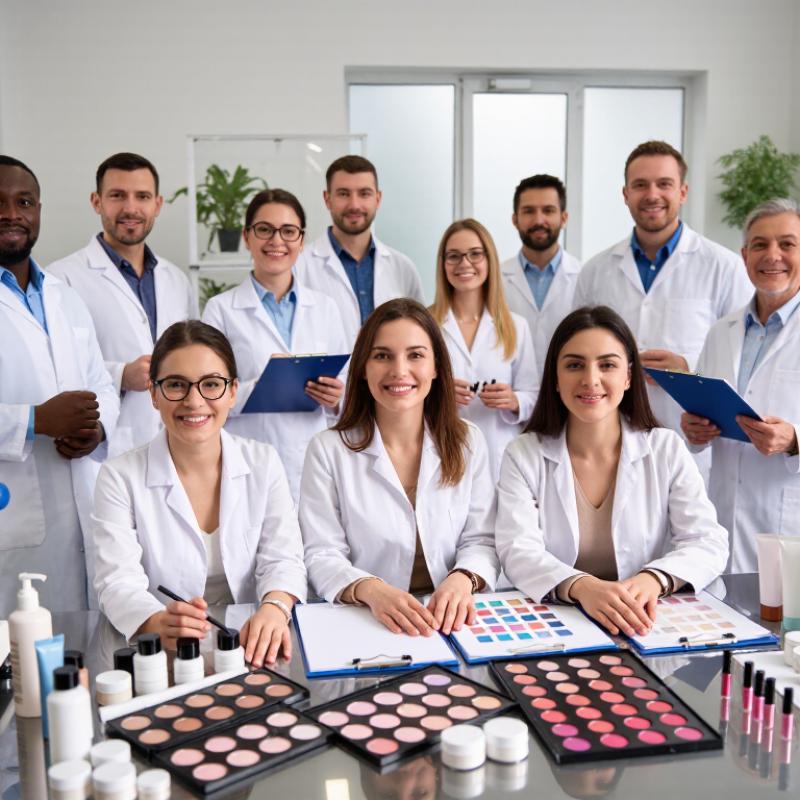
Private label cosmetics manufacturing allows a business to sell products made by an experienced external factory. The seller chooses the formula, packaging, scent, shade, or product format. The manufacturer handles blending, filling, testing, and production control. This model differs from simple resale because the product is developed for a specific label. A face cream may arrive in a small jar, with a custom label and a defined ingredient list. The physical product represents the seller’s market position.
Reliable manufacturing requires more than attractive packaging. A capable supplier should provide ingredient documentation, safety assessments, stability testing, batch records, and clear quality procedures. Production areas should be clean, controlled, and suitable for cosmetic manufacturing. Label claims also need careful review. Words such as “repairs” or “heals” may create regulatory problems in some markets. In practical projects, the first sample can look perfect but feel wrong on skin. That small mismatch can delay launch and waste money. Honest feedback is necessary.
Tips: Request a small sample batch before placing a large order. Check texture, scent, color, packaging fit, and product performance. Confirm minimum order quantities and production timelines in writing. Ask how changes are recorded after approval. Review every label with qualified regulatory support. Do not rely on verbal promises alone. A supplier may be experienced, yet communication can still fail. Clear specifications, retained samples, and scheduled inspections reduce avoidable surprises.
How the Top Manufacturers Are Selected and Compared
Selecting the top 10 private label cosmetics manufacturers requires more than comparing product catalogs. The assessment should examine formulation expertise, production capacity, quality systems, and transparent documentation. McKinsey’s State of Fashion: Beauty 2023 valued the global beauty market at about $430 billion in 2022. It also projected nearly $580 billion by 2027. That growth increases pressure on manufacturers to deliver consistent quality at scale.
Our comparison gives practical weight to ISO 22716-based manufacturing controls, stability testing, batch traceability, and responsible ingredient screening. Auditors should inspect mixing rooms, filling lines, sample retention areas, and temperature records. A factory may promise rapid development, but its laboratory staffing and failed-batch procedures reveal more. Cosmetics Europe reported that Europe’s cosmetics and personal care market reached approximately €88.7 billion in retail sales during 2023. Regional compliance knowledge therefore matters, especially for labeling, safety files, and product claims.
Cost is included, but never treated as the main score. Minimum order quantities, lead times, packaging flexibility, and technical support can change the real value of a supplier. Customer references and recent audit evidence receive higher trust than polished presentations. No ranking is perfectly objective. Data may be incomplete, and factory performance can vary between sites. That limitation deserves attention. The final list therefore combines reported capacity, documented quality practices, formulation experience, communication speed, and evidence from buyer evaluations.
Top 10 Private Label Cosmetics Manufacturers Worldwide
How the Top Manufacturers Are Selected and Compared
Manufacturers are compared using practical sourcing criteria commonly applied in private-label cosmetics procurement. The percentages represent the editorial evaluation weighting, not company-specific performance data.
Product quality and regulatory compliance receive the greatest weight because cosmetics must meet safety, labeling, and market-access requirements before commercial launch. Manufacturing capability, formulation support, minimum order quantity, lead time, customization, sustainability, and export experience complete the comparison framework.
Top 10 Private Label Cosmetics Manufacturers Worldwide
Top 10 Private Label Cosmetics Manufacturers Worldwide
The top 10 private label cosmetics manufacturers worldwide are often judged by more than production capacity. Reliable manufacturers combine formulation expertise, strict quality control, flexible minimum orders, and clear communication. Their laboratories should support skincare, haircare, makeup, and personal care projects with documented testing procedures. Strong suppliers also provide stability testing, ingredient traceability, packaging guidance, and accurate production timelines.
In practice, buyers should inspect factory certifications, sample quality, and batch consistency before signing a contract. A manufacturer may offer beautiful packaging but lack dependable after-sales support. That weakness can create delays and expensive product changes. I have found that small details matter, such as clean filling areas, sealed sample jars, and responsive technical staff. Still, no supplier is perfect. Even experienced manufacturers may struggle with unusual textures or seasonal material shortages.
Tips: Request current certificates, test several samples, confirm minimum order quantities, and ask for a written quality agreement. Visit the facility when possible. Check how complaints are recorded and resolved. A clear development process usually signals professional management. Do not choose based on price alone. A cheaper formula may require more revisions, weaker packaging, or longer delivery times. The best private label partner should understand your target market, explain limitations honestly, and protect product consistency from the first sample to the final shipment.
Product Categories, Services, and Customization Options
Top 10 Private Label Cosmetics Manufacturers Worldwide
Product Categories, Services, and Customization Options
Private label cosmetics manufacturers worldwide offer diverse product categories for growing beauty businesses. These commonly include skincare, color cosmetics, haircare, body care, and sun protection. A capable manufacturer may develop cleansers, serums, creams, masks, foundations, lip products, shampoos, and hand care. Product texture matters. A lightweight gel suits humid climates, while a rich cream may serve dry skin better.
When comparing the top ten manufacturers, examine their complete services, not only their sample catalogues. Strong partners usually provide formula development, laboratory testing, stability checks, packaging design, filling, labeling, and shipping support. They should explain minimum order quantities and production timelines clearly. Customization can include fragrance, color, active ingredients, texture, container shape, closure type, and printed artwork. Some suppliers also offer ready-made formulas for faster launches.
A perfect first brief is rare. Product testing may reveal separation, unwanted scent, or difficult application. This is useful feedback, not failure. Ask for pilot samples and review ingredient documentation before approving production. Manufacturing quality should be supported by traceable batch records and consistent inspection procedures. Regulatory requirements also vary between markets, so responsible suppliers help verify claims and labels. Custom packaging looks impressive, but it can increase costs and create waste. Practical choices often perform better. A manufacturer that welcomes questions may be more reliable than one promising everything.
Key Factors for Choosing the Right Manufacturing Partner
Choosing a private-label cosmetics manufacturer requires more than comparing unit prices. Cosmetics Europe reported €96 billion in European cosmetic and personal-care retail sales in 2023, underscoring the scale of this competitive market.
For a new product, ask manufacturers for documented quality controls, batch traceability, stability-testing procedures, and clear responsibility for product specifications. ISO 22716 provides internationally recognized good manufacturing practice guidance for cosmetics. Verify how a facility applies it; a certificate alone does not prove every process fits your product.
Request sample batches and review ingredient documentation, packaging compatibility, lead times, minimum order quantities, and change-control procedures. A low quote can hide costly rework.
Tips: Ask for a sample batch record. Confirm who handles stability and compatibility testing. Get timelines in writing. Then speak with a current customer, if available.
Communication matters as much as equipment. The right partner should explain delays, flag formulation limits early, and provide consistent answers across technical and sales teams. Check whether the manufacturer can scale production without changing agreed specifications.
Also discuss capacity during peak periods and how defects are investigated. Small details matter: a leaking pump or inconsistent shade can undermine a carefully planned launch. I would not rely on promises alone; compare written procedures with actual samples and records.
FAQS
An external factory develops and produces cosmetics for a seller’s label. The seller can choose the formula, scent, shade, packaging, or product format.
Common options include skincare, makeup, haircare, body care, and sun protection. Products may include cleansers, serums, creams, foundations, shampoos, and masks.
Useful services include formula development, laboratory testing, stability checks, packaging design, filling, labeling, and shipping support. Ask which services are included.
Request ingredient documents, safety assessments, stability results, batch records, and quality procedures. Evidence matters more than polished presentations.
Yes. Check the product’s texture, scent, color, packaging fit, and performance on skin. A cream can look right in its jar but feel wrong when applied.
Minimum order quantities, packaging choices, formula changes, and production schedules all affect cost and timing. Get key details in writing.
Stability testing can reveal issues such as separation over time. Batch records help track production details and support consistent quality.
Review labels with qualified regulatory support for each target market. Certain claims may cause problems, and requirements vary by region.
Not necessarily. A shaped container or printed design may look distinctive, but it can raise costs and create waste. Practical packaging may work better.
No. Available data may be incomplete, and performance can differ between factory sites. Recent audit evidence and buyer references can still help.
Conclusion
Private Label Cosmetics Manufacturing enables businesses to create and sell cosmetic products under their own brand without building an in-house production facility. This article explains how the model works, including product development, formulation, packaging, quality control, and regulatory support. It also outlines a practical approach to comparing leading manufacturers based on production capabilities, certifications, minimum order quantities, customization options, lead times, communication, and supply chain reliability.
The overview of the top 10 private label cosmetics manufacturers worldwide highlights the wide range of products and services available, from skincare and haircare to makeup, body care, and personal wellness products. Readers will learn how manufacturers support custom formulas, packaging design, fragrance selection, testing, and scalable production. The final section presents key considerations for choosing a suitable manufacturing partner, helping businesses balance quality, cost, flexibility, compliance, and long-term growth objectives.